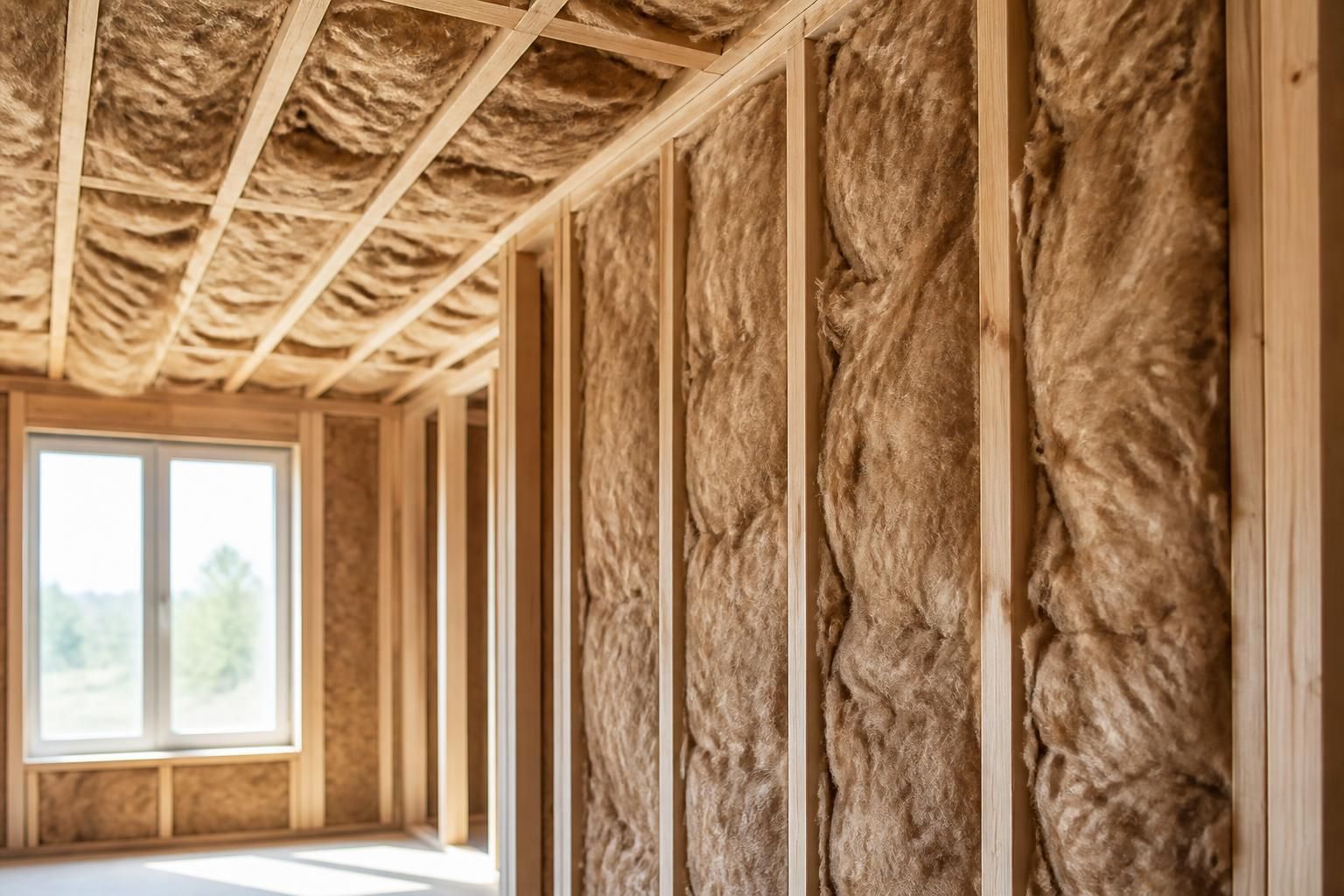
If your new build is still open to the studs, insulation choices need to be made carefully before the walls close up. The wrong product, poor air sealing, or missed thermal gaps can leave a home harder to heat, harder to cool, and less consistent from room to room.
Edmonton Insulation Company helps builders, homeowners, and project managers plan and install new construction insulation for homes and light commercial spaces at 10718 124 St, Edmonton, AB T5M 0H1. We look at the assembly, the insulation target, and the use of the space so the project gets the right materials from the start.
New construction gives you a chance to build comfort into the structure before finishes go on. That means choosing insulation for the attic, walls, rim joists, basement areas, garage spaces, and any other part of the building envelope that affects heat loss and moisture control.
Edmonton Insulation Company works on new homes, custom builds, renovations with open walls, garages, workshops, and commercial projects. We coordinate insulation installation around the build stage so the work fits the framing, mechanical plans, and finishing schedule.
Different parts of a new build call for different insulation types. The right choice depends on the cavity size, moisture exposure, target R-value, and how the space will be used. We help compare the options before installation starts so the project does not rely on guesswork.
Fiberglass batt insulation works well for standard wall and ceiling cavities when the framing layout is regular and access is straightforward. It is a common choice for many new construction assemblies because it can be installed efficiently while still offering solid thermal resistance.
Blown-in insulation and cellulose insulation are useful where coverage needs to fill irregular spaces or add depth across larger attic areas. These materials can help reduce voids and improve overall blanket coverage when the design calls for loose-fill installation.
Spray foam insulation, including open cell and closed cell options, is often selected for rim joists, difficult cavities, garage assemblies, and areas where air control matters as much as thermal resistance. It can support tighter sealing around framing transitions and awkward spaces.
Some areas of a new build have a bigger impact on comfort and energy use than others. If these spots are under-insulated or left with air leaks, the whole building can feel less consistent.
When we review a project, we look at the full envelope instead of focusing on one area only. That approach helps the insulation work together instead of leaving weak spots behind.
Insulation slows heat transfer, but it does not stop air leaks by itself. For new construction, air sealing should be part of the plan before insulation is installed. Small openings around framing, penetrations, and transitions can reduce the value of even a strong insulation package.
We often recommend air sealing at the attic plane, rim joists, and other leak-prone areas before batts, blown-in material, or spray foam go in. This helps the insulation perform closer to its intended R-value and can reduce drafts, temperature swings, and attic moisture concerns.
Good insulation work starts before installation day. On new construction projects, timing matters because some materials must be installed before drywall, while other areas may need to be revisited after additional trades finish their work. We help keep the sequence clear so the insulation layer is not rushed or compromised.
Edmonton Insulation Company reviews the project scope, the intended use of the space, and the areas that need special attention. That may include attic top-ups, wall insulation, foundation insulation, garage insulation, or insulation removal if an older layer is being replaced during a renovation or rebuild.
Many comfort complaints begin with insulation decisions made too late or with incomplete coverage. In new construction, the most common problems are not dramatic. They are small gaps, missed transitions, and weak spots that become noticeable only after the space is occupied.
Watch for these issues before the project closes up:
When these concerns are addressed during construction, the finished building is easier to live with and easier to maintain.
Insulation should match the building assembly and the climate demands of the area. In Edmonton, AB T5M 0H1, the goal is not just to fill cavities. It is to build a balanced envelope that supports heat retention, moisture control, and consistent indoor comfort through the seasons.
We help clients understand where extra depth makes sense, where spray foam may solve a specific issue, and where batt or blown-in insulation is the more practical choice. The right R-value is about more than a number on paper. It has to work with the structure, the ventilation plan, and the other materials around it.
Every new construction project has its own sequence, but the service usually follows a clear path. That keeps the work organized and helps everyone on site know what comes next.
That process helps keep the project moving while protecting the quality of the finished envelope.
If you are planning a new build or overseeing a construction schedule, asking the right questions early can save time later. These answers cover the details people usually want before insulation goes in.
The right wall insulation depends on cavity size, access, and the performance target for the building. Fiberglass batt, cellulose, blown-in insulation, and spray foam can each make sense in different wall assemblies.
Yes. Air sealing helps stop warm indoor air from moving into the attic and reduces the chance that insulation will be undermined by leakage paths.
Yes. Garage insulation is often planned with the rest of the structure so the separation between the garage and living space is addressed while the framing is still open.
Basement insulation and foundation insulation can improve comfort at lower levels and help the building hold heat more evenly across the structure.
No. Spray foam is useful for specific applications, but other areas may be better served by batt, blown-in, or cellulose insulation depending on the assembly and access.
Some areas can, but new construction insulation is easier to plan when it is scheduled before drywall and trim work. Early coordination helps avoid missed cavities and rework.
If you are building a home, garage, addition, or commercial space, the insulation plan should be set before the project closes up. Edmonton Insulation Company can review your new construction scope, explain the options, and provide a free estimate for the work needed at 10718 124 St, Edmonton, AB T5M 0H1.
Call +16477005472 to discuss attic insulation, wall insulation, spray foam insulation, basement insulation, crawl space insulation, or complete new construction insulation for Edmonton and surrounding communities.
Start Here
Tell us about your attic, walls, garage, basement, crawl space, or commercial property. We will help you understand the best insulation approach for comfort, efficiency, moisture control, and long-term performance.