Frost on attic sheathing, damp insulation, water spots after a thaw, or heavy ice at the roof edge are not problems to ignore. In Edmonton, long stretches of cold weather create a large temperature difference between indoor air and the outdoors, exposing weak points in the ceiling plane and attic assembly.
Edmonton Insulation Company investigates the connected conditions behind winter attic problems, then recommends practical corrections. The goal is not simply to add insulation. It is to limit warm, moisture-laden air reaching cold surfaces, improve thermal resistance where it is needed, protect ventilation channels, and support a drier, more comfortable building envelope.
During the heating season, warm indoor air naturally rises through the home. This stack effect can drive air through small openings around attic hatches, plumbing stacks, electrical penetrations, recessed fixtures, exhaust-fan openings, top plates, and other gaps in the ceiling air barrier.
When that humid air reaches a roof deck, sheathing, rafters, trusses, or roofing fasteners that are below the dew point, its moisture can condense or freeze. Frost may build quietly over days or weeks. When outdoor conditions warm, it can thaw and drip back into the attic or ceiling areas, a situation often called attic rain. The pattern is a building-envelope issue, not a problem solved by one product alone.
Attic performance depends on the relationship between insulation, air leakage, vapour control, and ventilation. R-value measures thermal resistance, so adequate, even insulation slows heat loss through the ceiling. It does not, however, stop a concentrated stream of warm air from passing through an unsealed opening.
Thermal bridging at framing and weakly insulated transitions can also leave colder surfaces that are more susceptible to condensation. Our assessment considers how these elements work together.
Ice dams develop under the right snow and weather conditions when parts of a snow-covered roof warm unevenly. Heat loss into the attic can warm sections of the roof above the main roof plane, melting snow. Water then runs toward colder eaves and refreezes, where it can form a ridge of ice.
The connection is straightforward: heat loss plus a snow-covered roof can produce uneven roof temperature, then snowmelt and refreezing at the eaves. Insulation and air sealing can reduce one major contributor, while maintaining clear soffits and ventilation channels helps preserve the intended attic conditions. Roof details and weather also influence ice dams, so a thorough inspection is important before selecting a solution.
Many attic issues are first noticed from inside the home or at the roof edge. A timely inspection can identify the likely source before repeated freezing and thawing affect finishes or insulation.
An attic assessment starts with the symptoms you have observed, then looks for the air, heat, and moisture paths that may be creating them. We review insulation depth and coverage, access hatches, ceiling-plane penetrations, roof sheathing, attic ventilation, and visible signs of past or active condensation.
We look for frost patterns, staining, wet or compressed insulation, cold surfaces, and evidence of recurring moisture.
Attic hatches, plumbing and electrical openings, recessed fixtures, exhaust-fan penetrations, and framing transitions are checked for likely bypasses.
We assess whether coverage is thin, uneven, settled, or leaving thermal bridges and exposed areas.
We look at soffits, attic baffles, roof ventilation, and whether insulation is restricting air movement at the eaves.
Recommendations are prioritized so you understand which corrections address the observed conditions and why.
Closing ceiling-plane leakage points is often the most important first step. This can include sealing penetrations, transitions, and gaps around access openings so humid indoor air is less able to reach cold attic surfaces.
An attic hatch can be a major weak point when it lacks weatherstripping, insulation, or an effective air seal. Improving the hatch detail helps support the air barrier and the surrounding insulation layer.
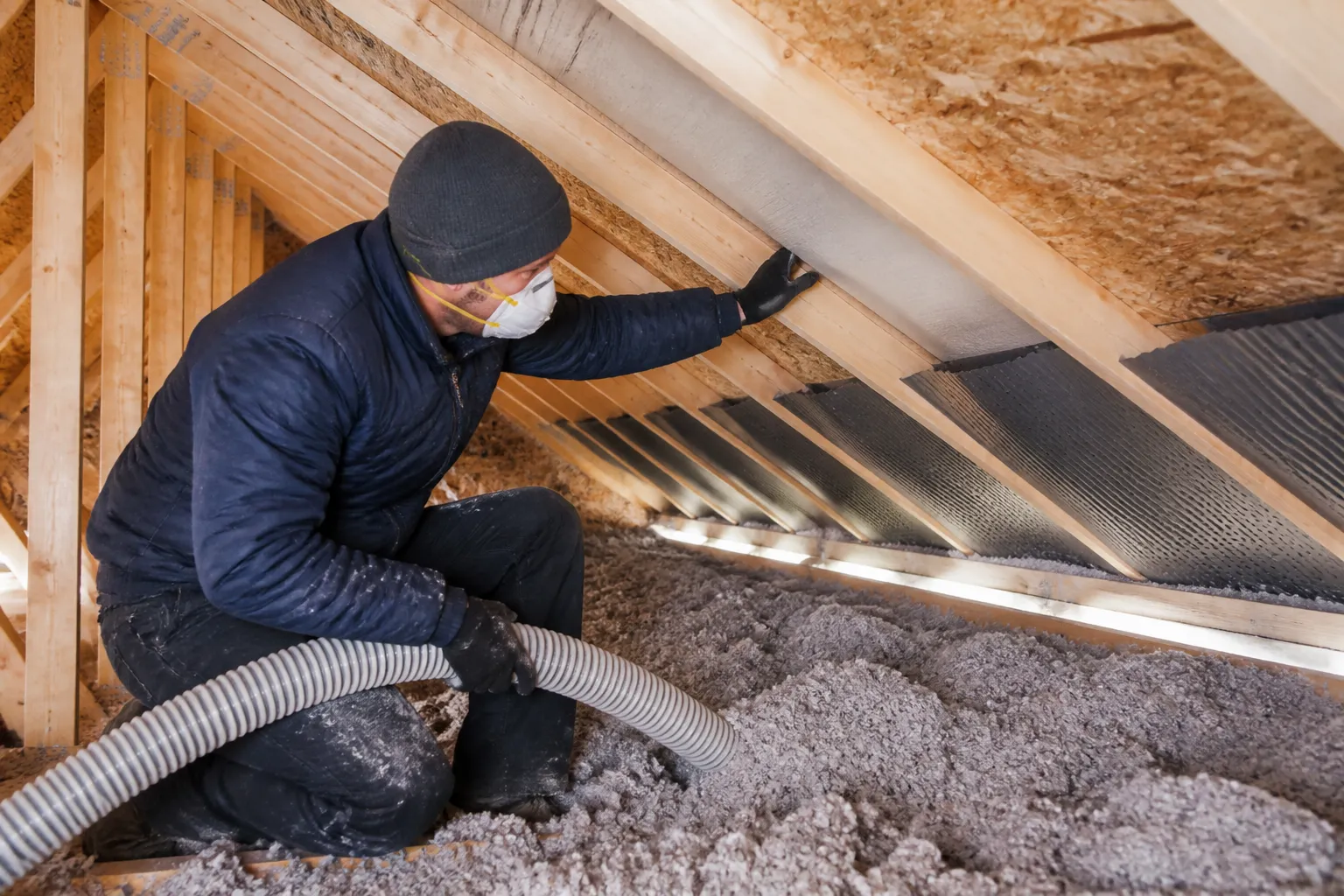
Blown-in cellulose or fiberglass may be used to restore more even coverage and improve R-value after the ceiling plane has been prepared. The material and depth are selected for the attic condition, access, and project goals.
Attic baffles help keep insulation from blocking soffit ventilation and preserve a channel from the eaves into the attic. We assess ventilation as part of the whole assembly, including the condition and routing of bathroom exhaust ducts where appropriate.
Prevention is not about making an attic warm. A healthy attic assembly limits heat and air escaping from the conditioned space below while allowing its ventilation strategy to function as intended. That reduces the conditions that can bring interior moisture into contact with cold roof sheathing.
Maintain reasonable indoor relative humidity during very cold weather, keep bathroom exhaust ducting connected and directed outside, and address signs of air leakage promptly. If previous frost or attic rain has occurred, it is especially important to inspect the attic before adding new insulation over a potential moisture source.
Not always. Ventilation may be part of the issue, but attic frost often starts when warm, humid indoor air leaks through the ceiling plane and reaches cold surfaces. The air barrier, insulation, vapour control, and ventilation need to be reviewed together.
Attic rain is the term often used when frost that formed on cold attic surfaces thaws and drips into the attic or onto the ceiling below. Identifying how moisture reached those surfaces is the key to preventing a repeat.
Additional insulation can improve R-value and reduce heat loss, but it does not seal air leaks. When frost is present, targeted air sealing and a review of moisture and ventilation conditions are usually needed before or alongside an insulation top-up.
Under suitable snow and weather conditions, heat loss can melt snow higher on the roof. The water moves to colder roof edges and refreezes. Reducing uneven heat loss through air sealing and insulation helps address one contributor.
No. Bathroom exhaust should be directed outdoors, not released into the attic. During an inspection, duct connections, routing, and insulation can be reviewed where they are accessible.
Inspection is useful whenever you notice frost, condensation, water staining, recurrent ice buildup, cold upper rooms, or drafts. Winter conditions can make patterns easier to see, while an assessment before the next heating season can help plan corrective work.
If you are seeing attic frost, condensation, attic rain, or ice buildup at the eaves, Edmonton Insulation Company can help you understand the underlying conditions. We serve Edmonton and nearby communities with clear recommendations for air sealing, insulation upgrades, moisture management, and attic ventilation improvements.
Call +16477005472 to request a free attic assessment and estimate. We will review the attic assembly, explain what we find, and help you build a practical plan for a more comfortable, resilient home.
Start Here
Tell us about your attic, walls, garage, basement, crawl space, or commercial property. We will help you understand the best insulation approach for comfort, efficiency, moisture control, and long-term performance.