Uneven temperatures, cold perimeter walls, drafts near loading areas, and high heating bills often point to weak insulation or air leakage across your building envelope. If your office, warehouse, retail space, apartment property, or commercial suite feels hard to keep comfortable, the next step is a clear insulation assessment and a plan that matches the way the building is used.
Edmonton Insulation Company helps property owners, managers, builders, and business operators improve commercial comfort and energy performance at 10718 124 St, Edmonton, AB T5M 0H1. We look at where heat is escaping, where air movement is creating problems, and which insulation materials make sense for your walls, roof areas, mechanical rooms, rim joists, foundations, and other key spaces.
Commercial buildings rarely fail in just one place. A warm office above a colder storage area, a drafty vestibule, a noisy tenant wall, or a metal building that loses heat too quickly can all point to gaps in the insulation system. When those gaps remain open, the building works harder to stay comfortable and the results show up as uneven temperatures, condensation concerns, and wasted energy.
Edmonton Insulation Company starts by identifying the most important loss points first. That may mean attic areas, wall cavities, roof assemblies, rim joists, crawl spaces, basements, or service penetrations around pipes, ducts, and framing. From there, we recommend the insulation type that fits the structure, occupancy, and performance goals.
Commercial insulation is not one product for every building. The right approach depends on how the property is built and how it is used each day. Some spaces need thermal resistance. Others need air sealing, sound control, or moisture management. Many properties need a combination of all three.
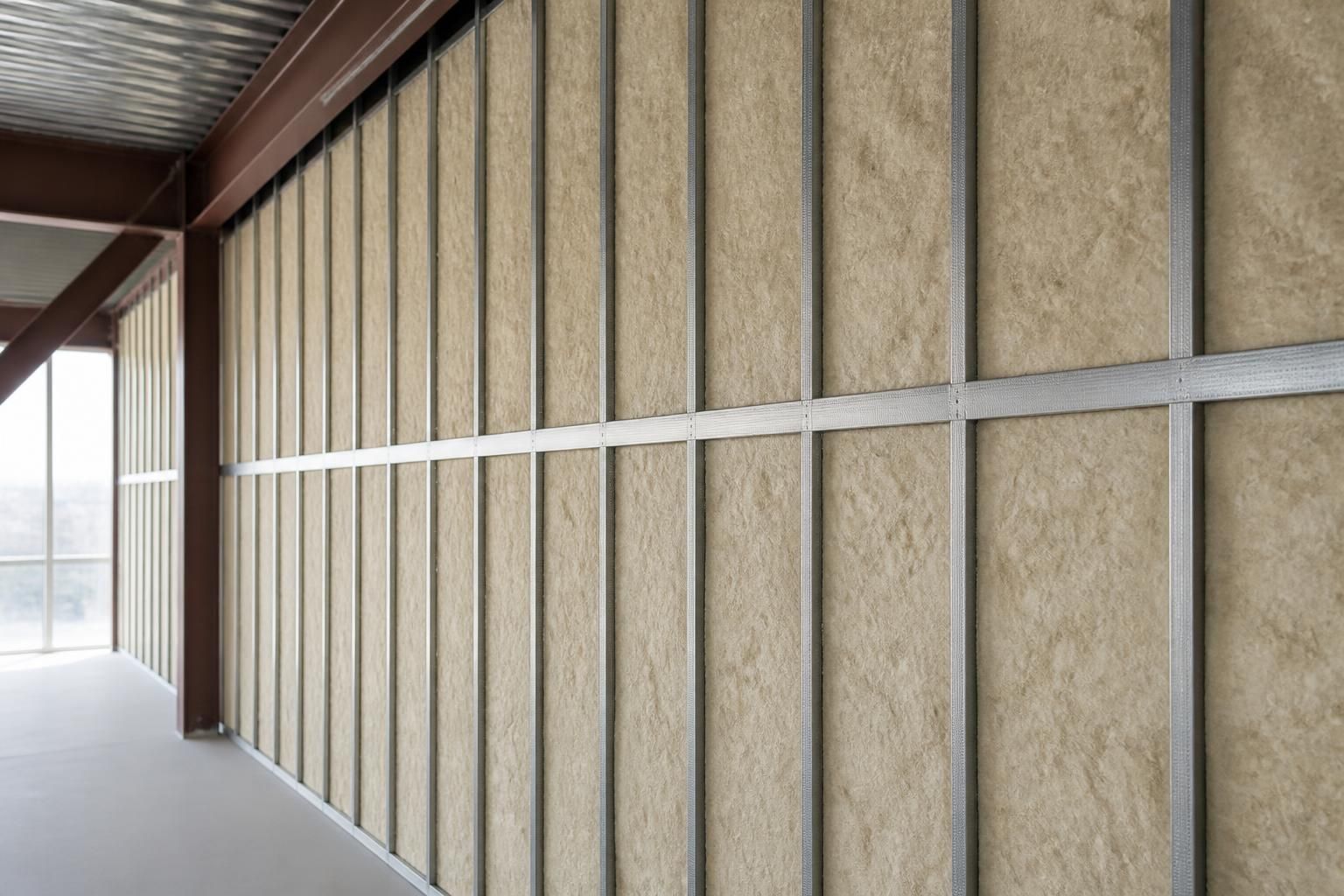
Exterior walls and select interior partitions can benefit from batt, blown-in, or spray foam insulation depending on the structure and access.
Attic insulation and top-ups help reduce heat loss through the upper building envelope, which is especially important where conditioned space sits below roof framing.
Basement insulation, foundation insulation, and rim joist insulation help limit cold transfer and improve comfort at lower levels.
Crawl space insulation can reduce cold floors, moisture issues, and air leakage from below the occupied space.
Garage insulation helps separate unconditioned or lightly conditioned areas from adjoining suites or work areas.
Different materials serve different jobs. We help you choose based on access, budget priorities, fire and moisture concerns, sound control, and the existing structure. Edmonton Insulation Company installs commercial insulation with a focus on long-term value and a clean finish that suits the building.
Blown-in insulation is useful where cavities need full coverage or where access is limited. Cellulose insulation can be a strong option for attics and enclosed spaces that benefit from dense coverage and reduced air movement through the insulation layer.
Fiberglass batt insulation works well in framed wall systems, select partitions, and other accessible cavities. It offers a dependable thermal layer when installed to fit the cavity cleanly and without compression.
Spray foam insulation, including open cell and closed cell options, can help where air sealing and insulation are both needed. It is often considered for rim joists, irregular cavities, tight mechanical areas, and assemblies that need a stronger air barrier.
Insulation alone cannot solve every comfort problem. If air leaks are moving through the building envelope, heated air escapes and outside air replaces it. That creates drafts, cold spots, and extra strain on the heating system. Air sealing is a key part of many commercial insulation projects because it reduces unwanted movement through gaps and transitions.
We often review penetrations, framing junctions, utility openings, attic access points, and transitions between different building materials. On the right project, sealing those areas before or alongside insulation upgrades can make the finished result far more effective.
Some commercial buildings need a full insulation reset. Others only need targeted improvements. We help owners and managers choose the right scope so the work fits the building condition and the goals for the space.
On many projects, the most effective plan is a layered one. That may mean removing damaged material, air sealing key openings, then installing a new insulation system that suits the building assembly.
Every commercial building has different access points, operating hours, and occupancy patterns. Our process is designed to reduce disruption and keep the project organized from assessment through completion.
We review the building areas that are losing heat, showing moisture concerns, or missing insulation coverage.
We outline material options and explain where each one fits best for the structure and use of the property.
If insulation removal or air sealing is needed, we handle that work before new material goes into place.
We install the selected insulation with attention to coverage, fit, and the details that affect performance.
We confirm the work completed and walk through the main areas so you understand what was done and why.
Commercial insulation affects more than heating bills. It helps stabilize interior conditions, supports better sound control, and reduces the movement of warm, moist air into colder parts of the building envelope. That matters for offices, mixed-use properties, warehouses, apartment buildings, and commercial suites where comfort and material performance both matter.
When insulation and air sealing are aligned with the building design, you can expect fewer draft complaints, more consistent temperatures, and better control around moisture-prone areas. That is especially important where different rooms or tenants use a space in different ways.
Edmonton Insulation Company serves Edmonton, AB T5M 0H1 and nearby communities including St. Albert, Sherwood Park, Spruce Grove, Stony Plain, Leduc, Beaumont, Fort Saskatchewan, Devon, Morinville, Nisku, and Parkland County. We work with local property owners who need clear recommendations and dependable installation for commercial buildings of many sizes and layouts.
Whether the project is a single facility, a multi-unit property, or part of a larger renovation or new build, we aim to make the insulation scope straightforward and easy to understand.
Commercial insulation can be used across offices, retail spaces, warehouses, apartment buildings, condominium developments, workshops, and other business properties. The specific material and approach depend on the building assembly and access.
Uneven temperatures, drafts, cold walls, condensation concerns, and high heating demand are common signs. An assessment helps determine whether the issue is insulation, air leakage, or a combination of both.
No. Spray foam insulation is useful in certain assemblies, but other spaces are better suited to fiberglass batt insulation, blown-in insulation, or cellulose insulation. The right choice depends on the cavity, access, moisture concerns, and performance goals.
Yes. Insulation removal is often part of a larger upgrade when old material is damaged, settled, contaminated, or no longer delivering the needed performance.
Yes. Attic insulation and attic top-ups can make a major difference where roof areas are losing heat or where the upper envelope is underinsulated.
It helps to know the building type, the areas that feel uncomfortable, any recent renovation plans, and whether the goal is better comfort, energy efficiency, sound control, or moisture management. That gives us a stronger starting point for the assessment.
If your property needs clearer temperature control, better building performance, or a smarter insulation plan, Edmonton Insulation Company can help. We offer honest recommendations, premium materials, and free estimates for commercial insulation work across Edmonton, AB T5M 0H1 and surrounding communities.
Call +16477005472 to book an assessment and get a practical plan for your building.
Start Here
Tell us about your attic, walls, garage, basement, crawl space, or commercial property. We will help you understand the best insulation approach for comfort, efficiency, moisture control, and long-term performance.