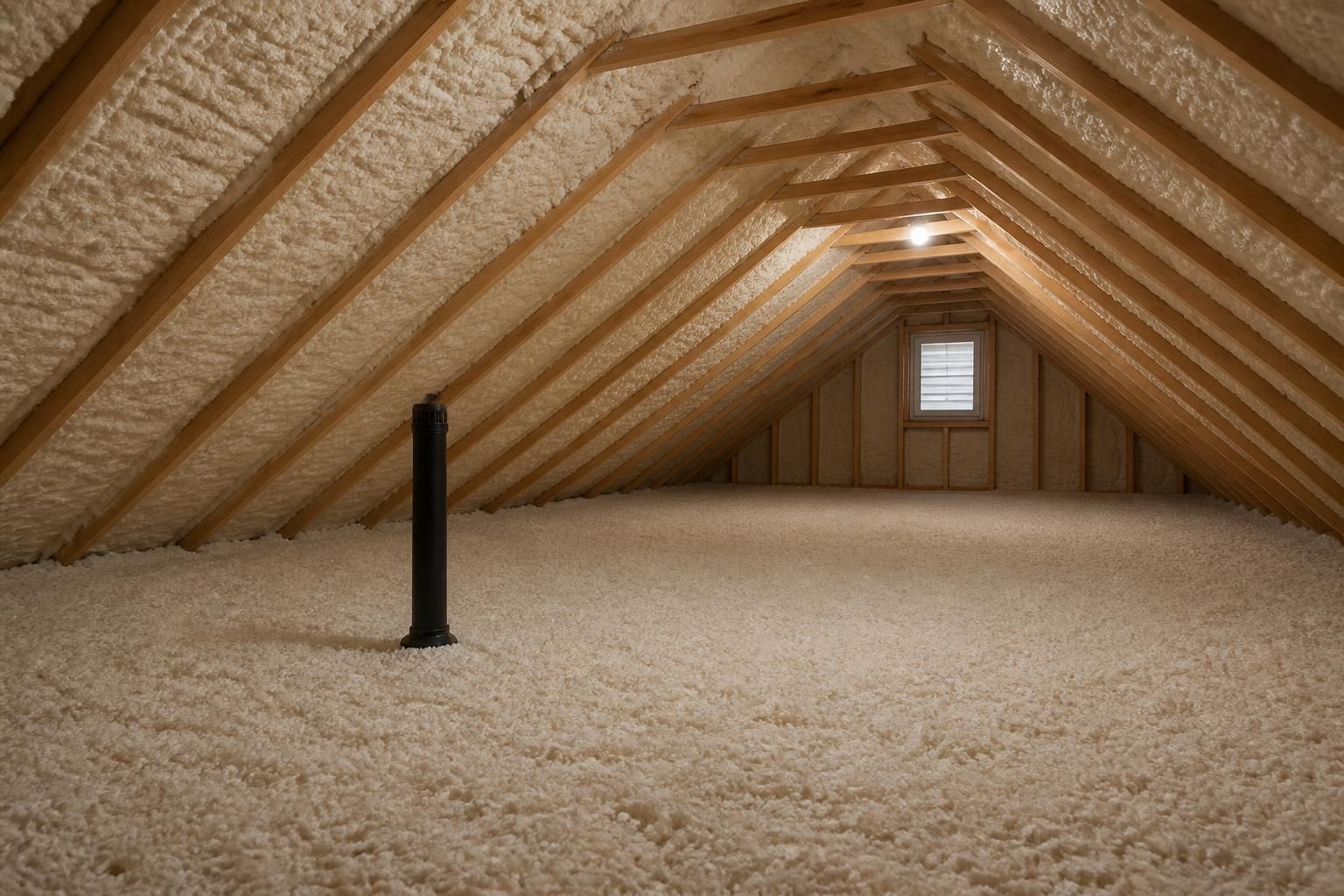
Cold rooms, uneven temperatures, and rising heating bills often start above the ceiling, where thin or settled insulation lets heat escape. If you notice drafts, icy roof edges, or one upstairs room that never feels right, the attic may be the first place to inspect.
Edmonton Insulation Company helps homeowners at 10718 124 St, Edmonton, AB T5M 0H1 identify what their attic needs and choose the right upgrade for the home. We look at insulation depth, air leakage, attic access, ventilation, and any signs of moisture so you can make a clear decision before the next cold stretch.
Attic insulation slows heat transfer between your living space and the roof assembly. During colder months, it helps keep heated air where you want it, and it reduces the strain on your heating system. In summer, it also helps limit heat buildup from the roofline.
When attic insulation is too thin, damaged, or unevenly installed, the whole house can feel harder to keep comfortable. You may notice some rooms warm up quickly while others stay cool, or you may keep adjusting the thermostat without getting steady results.
A strong attic upgrade starts with a careful look at the attic itself. We assess more than the insulation already there. Air leaks, attic access points, and ventilation all affect how well the finished system performs.
Edmonton Insulation Company uses this assessment to recommend the most sensible path forward, whether that means a top-up, removal and replacement, or a full attic upgrade.
Different attic conditions call for different materials. The right choice depends on what is already installed, how much space is available, and whether the attic needs added air sealing before new insulation goes in.
Blown-in insulation works well for topping up under-insulated attics and filling around irregular spaces. It can help create a more even coverage layer over the attic floor, which is useful when older insulation has settled.
Fiberglass batt insulation and cellulose insulation each have their place. Batt insulation is often used where framing and access allow for a cleaner fit, while cellulose is commonly used for dense, even coverage over large attic areas. We help homeowners compare these options based on attic conditions, not guesswork.
Spray foam insulation is sometimes chosen where air sealing and insulation need to work together, especially around unique details or problem areas. Open cell and closed cell spray foam serve different purposes, so the attic layout and building goals matter before a recommendation is made.
Insulation alone cannot solve every attic problem. If warm air is leaking into the attic through gaps and penetrations, the home may still lose comfort and efficiency even after new insulation is added. That is why air sealing is often part of a complete attic upgrade.
We focus on the places that commonly allow hidden heat loss, including wiring holes, plumbing chases, attic hatches, and other small openings at the ceiling line. Sealing those areas first helps the insulation do its job more effectively.
Attic insulation is closely connected to moisture management. If the attic traps too much warm air or has poor ventilation, condensation can form on cold surfaces. That can lead to damp insulation, staining, and other building concerns that are easier to address early.
Ice dams are another common concern when heat escapes through the attic and melts roof snow unevenly. The meltwater can refreeze near the eaves, creating a barrier that may lead to water problems. A balanced attic system, with the right insulation level and air sealing, helps reduce the conditions that contribute to this issue.
If your attic already shows signs of moisture damage, we can review whether insulation removal, targeted repairs, or a full replacement makes sense before new material is installed.
Homeowners often want to know what an attic project actually involves. The process should be straightforward, organized, and easy to follow.
At Edmonton Insulation Company, we keep the process clear so you know what is being done and why each step matters.
Some attics need a full replacement, while others only need an added layer to reach a better insulation level. A top-up can be a good fit when the existing insulation is clean, dry, and still usable. A larger update may be needed when the material is old, uneven, contaminated, or not suited to the home’s current needs.
Attic insulation upgrades are especially worth a closer look when the home has:
We also help builders, property managers, and commercial owners who need attic insulation solutions for new construction or renovation work.
Edmonton Insulation Company serves Edmonton, AB T5M 0H1 and nearby communities across the region, including St. Albert, Sherwood Park, Spruce Grove, Stony Plain, Leduc, Beaumont, Fort Saskatchewan, Devon, Morinville, Nisku, and Parkland County. Whether the project is a single-family home, garage, custom build, or larger property, the goal stays the same: a more comfortable space with insulation selected for the building and its needs.
We keep communication direct, explain the work clearly, and provide free estimates for attic insulation assessments. If you are comparing options, we can walk you through insulation types, attic access concerns, and whether air sealing should be part of the project.
Uneven room temperatures, cold upstairs areas, and visible settled insulation are common signs. An attic check can confirm whether the issue is insulation depth, air leakage, or both.
It can help reduce the heat loss that contributes to uneven roof melting. Air sealing and ventilation also matter, so the full attic assembly should be reviewed together.
Blown-in insulation, cellulose, fiberglass batt insulation, and spray foam each have different uses. The right choice depends on attic layout, access, and the condition of what is already there.
Yes. If the existing material is damaged, contaminated, or no longer suitable, insulation removal may be the right first step before a new installation.
Because leaks at the ceiling line can let warm air escape into the attic. Sealing those openings helps the new insulation perform more effectively.
Yes. We handle attic insulation for renovations, existing homes, and new construction projects, including homes, garages, and larger buildings.
If your attic is under-insulated, uneven, or showing signs of moisture or air leakage, a careful assessment is the smartest first move. Edmonton Insulation Company can review the space, explain the options, and provide a free quote for attic insulation at 10718 124 St, Edmonton, AB T5M 0H1.
Call +16477005472 to schedule your estimate and find out what your attic needs to support better comfort and building performance.
Start Here
Tell us about your attic, walls, garage, basement, crawl space, or commercial property. We will help you understand the best insulation approach for comfort, efficiency, moisture control, and long-term performance.