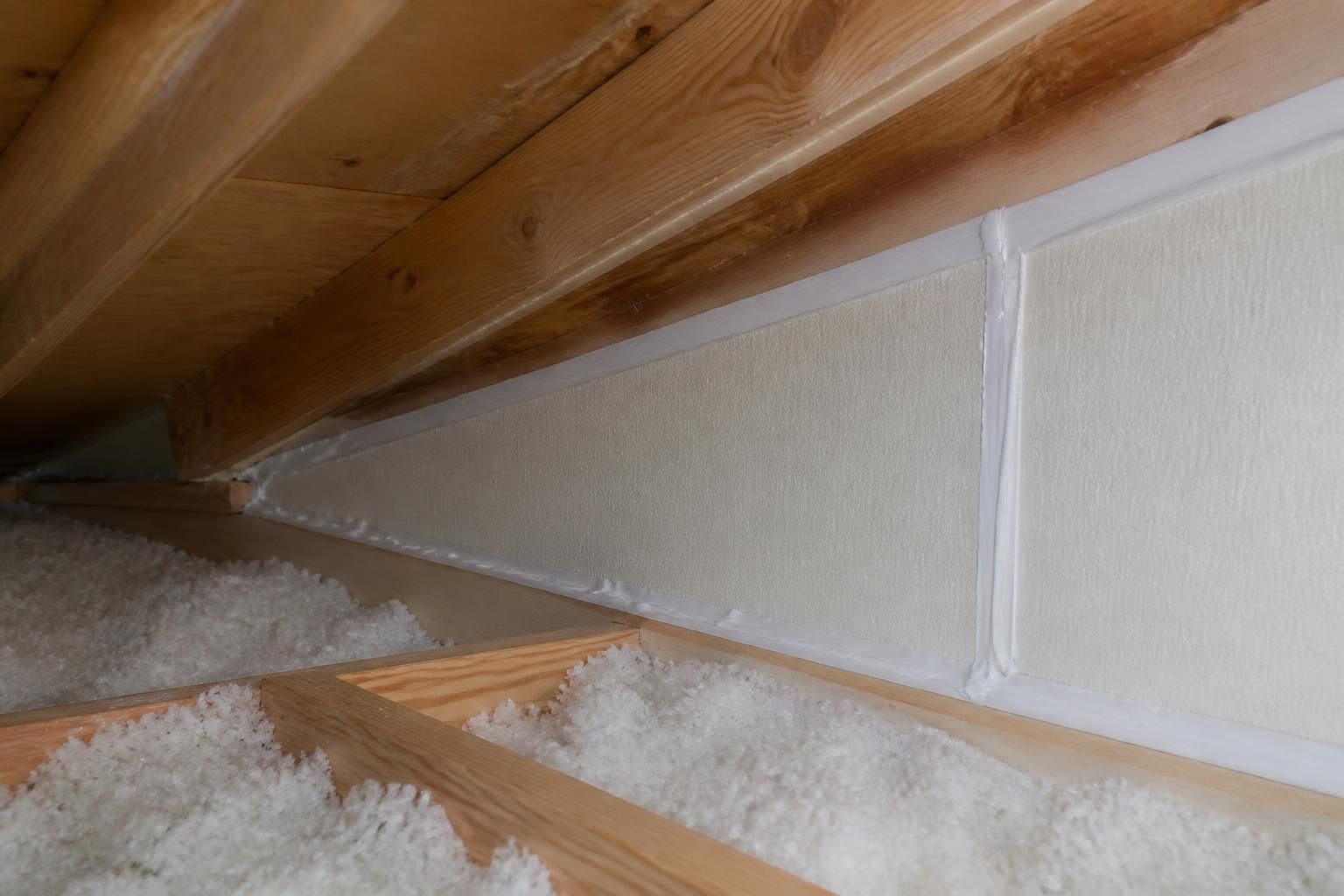
Cold drafts around outlets, baseboards, attic hatches, and framing gaps usually mean your home is leaking conditioned air. If rooms feel uneven, your furnace works harder than it should, or ice and condensation keep showing up where they should not, air sealing may be the missing step.
Edmonton Insulation Company helps homeowners and property managers at 10718 124 St, Edmonton, AB T5M 0H1 stop unwanted air movement with focused air sealing work that supports comfort, energy savings, and better insulation performance.
Air leakage is not always obvious. Many buildings look insulated on paper but still lose comfort through small gaps that connect the inside of the home to attics, crawl spaces, wall cavities, garages, and rim joists. Those gaps can create drafts, temperature swings, and moisture problems that insulation alone cannot solve.
When these symptoms show up together, sealing the air leaks first often makes the rest of the insulation work perform much better.
Most air leaks begin at the building seams, transitions, and penetrations that are easy to overlook during a renovation or upgrade. A thorough air sealing plan focuses on the places where indoor air escapes and outdoor air enters.
Openings around attic hatches, top plates, light fixtures, wiring, and plumbing stacks can move a large amount of air.
The joint where the foundation meets the framing is a frequent source of drafts and heat loss.
Holes for vents, wiring, pipes, and ducts can create hidden pathways for air movement.
Unsealed transitions here can pull cold air into the living area and raise moisture risk.
Walls and ceilings that separate the garage from the home deserve careful sealing to reduce fumes, dust, and temperature transfer.
Addressing these areas gives insulation a better chance to hold indoor temperatures steady instead of being undermined by air leakage.
Every building needs a different approach. The right method depends on where the leaks are, what materials are already present, and whether the area will receive attic insulation, spray foam insulation, blown-in insulation, or another upgrade afterward. Edmonton Insulation Company uses a practical, job-specific process that matches the leakage points rather than relying on a one-size-fits-all fix.
We often pair air sealing with insulation removal, attic top-ups, or complete insulation upgrades when existing materials are holding moisture, settling unevenly, or no longer match the needs of the building.
Air sealing is about more than comfort. It helps control how heat, moisture, and conditioned air move through the building. That matters during long heating seasons and during freeze-thaw changes that can magnify hidden leaks.
For many properties, the biggest gains come when air sealing is completed before or alongside insulation upgrades. That sequence helps the new insulation hold its rated performance instead of being weakened by moving air.
Homeowners and building managers often want a clear plan before work begins. We keep the process straightforward so you understand what is being sealed, why it matters, and how it fits with the rest of the insulation system.
We review the problem areas, ask about comfort concerns, and identify where leakage is most likely.
We open the needed areas carefully so sealing materials reach the actual leak points.
We seal the cracks, gaps, penetrations, and transitions that allow unwanted air movement.
If the project includes attic insulation, basement insulation, crawl space insulation, or other upgrades, we coordinate the sealing so the insulation can perform well.
We check the completed areas and confirm the work aligns with the building goals discussed at the start.
This approach works well for homes, garages, renovations, and commercial spaces that need a more controlled building envelope.
Air sealing and insulation should work together. Insulation slows heat transfer, while air sealing reduces the movement of air that can carry heat, moisture, and discomfort into or out of the building.
That combination is especially useful when upgrading older attic spaces, improving wall assemblies, or addressing basement and rim joist areas that have been overlooked. In many cases, a small amount of sealing can make a noticeable difference once insulation is added or refreshed.
Edmonton Insulation Company regularly helps clients match the right sealing approach with the right insulation material, whether the project calls for fiberglass batt insulation, cellulose insulation, blown-in insulation, or spray foam insulation. The goal is not to add more material everywhere. The goal is to solve the actual cause of the comfort loss.
Air sealing results depend on where the leaks are, how much leakage exists, and how the rest of the building envelope is built. Some homes benefit from attic-focused sealing, while others need attention at the foundation, garage interface, or basement level.
For property owners across Edmonton, AB T5M 0H1 and nearby communities, a tailored plan usually delivers better value than sealing random spots without a clear strategy.
Air sealing reduces unwanted movement of air through cracks, gaps, and penetrations. That helps limit drafts, heat loss, moisture transfer, and outside air intrusion.
Yes. Uneven temperatures often happen when air leaks let conditioned air escape and outdoor air enter through different parts of the building.
Most of the time, yes. Sealing the leaks first helps insulation do its job more effectively, especially in attics, rim joists, and other leaky assemblies.
Absolutely. Renovation work often exposes walls, ceilings, and transition points that are easier to seal before they are closed up again.
It can. Reducing warm, moist indoor air from reaching the attic helps lower condensation risk and supports better attic performance overall.
Yes. It is commonly paired with attic top-ups, insulation removal, basement insulation, crawl space insulation, and new construction insulation work.
If drafts, cold spots, or moisture concerns are pointing to hidden air leaks, a targeted air sealing plan can make a real difference. Edmonton Insulation Company serves Edmonton, AB T5M 0H1 and surrounding communities with honest recommendations, premium materials, and clear communication from start to finish.
Call +16477005472 to request a free insulation assessment or quote. We are available Monday through Sunday from 7:00 AM to 9:00 PM.
Start Here
Tell us about your attic, walls, garage, basement, crawl space, or commercial property. We will help you understand the best insulation approach for comfort, efficiency, moisture control, and long-term performance.