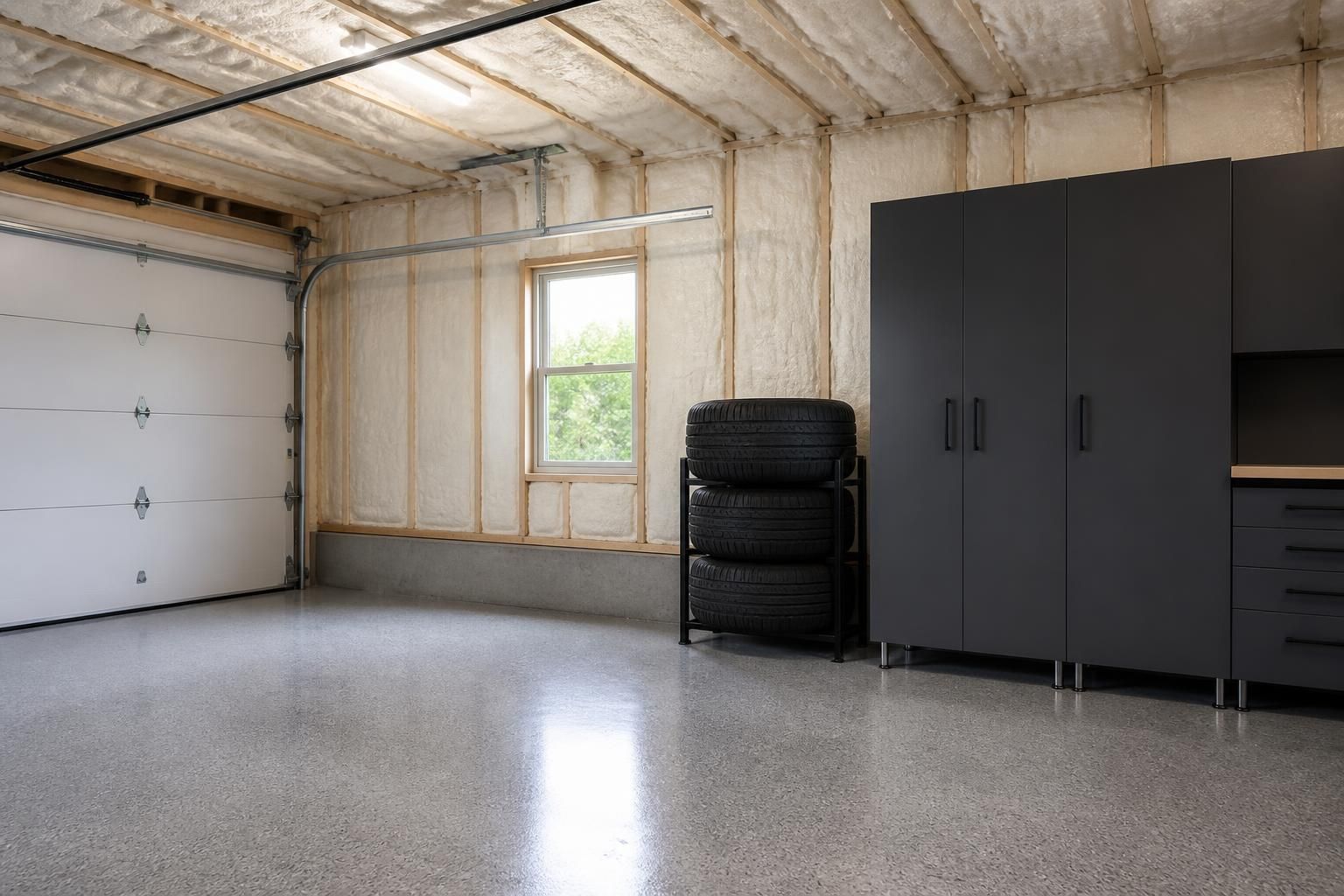
Your garage feels cold, dusty, or unevenly tempered, and the rooms beside it may notice it too. If the space is hard to use, if tools feel damp, or if there are drafts around the walls and ceiling, the garage may need insulation that matches the way the space is built.
Edmonton Insulation Company helps property owners at 10718 124 St, Edmonton, AB T5M 0H1 choose garage insulation that supports comfort, energy efficiency, and better building performance. We look at the wall cavities, ceiling assembly, air leakage, and the way the garage connects to the rest of the building, then recommend a clear path forward.
A garage can seem like a simple space, but weak insulation often shows up fast. Cold air can move through unsealed joints, heat can leave through thin assemblies, and temperature swings can make the space difficult to use for storage, hobbies, or a workshop setup.
Homeowners often start noticing one or more of these signs:
Garage insulation is not only about adding material. It is about controlling heat loss, managing air movement, and selecting a product that suits the wall, ceiling, or foundation area being upgraded.
Before any installation, we look at how the garage is built and how it is being used. Attached garages, detached garages, and heated workshop spaces each need a different approach. The right answer depends on the framing, existing insulation, access points, and whether the garage ceiling, walls, or rim joist are the main weak spots.
We check where outside air can move through the assembly. Common leak areas include top plates, penetrations for utilities, framing gaps, and transitions around the garage-to-house connection. Air sealing often needs to happen before insulation is added so the new material can do its job.
If there is already insulation present, we review whether it is compressed, missing, stained, damaged, or underperforming. Some garages need a top-up, while others benefit from removal and replacement when the old material has become ineffective.
A garage used only for parking has different needs than a garage used as a workshop, storage area, or seasonal buffer space. We match the solution to the way the space is actually used, not to a generic template.
Garage insulation can be built from several material types. The choice depends on the assembly and the performance target. We install materials that suit the project rather than forcing one product into every garage.
For many garages, the best result comes from a combination of air sealing and insulation rather than insulation alone. That approach helps reduce drafts, improve consistency, and make the space more usable.
Garage walls and ceilings do not all need the same treatment. The building assembly, the access available, and the desired comfort level all affect the recommendation. In some garages, wall insulation is the priority. In others, the ceiling above the garage is the key area because it borders conditioned living space.
Wall insulation helps slow heat movement through the garage envelope. For framed walls, fiberglass batt or spray foam may be appropriate depending on the cavity layout and the amount of sealing needed around corners, outlets, and framing transitions.
When there is a room above the garage, ceiling insulation becomes especially important. The goal is to reduce heat loss and limit air movement between the garage and the living space above. We look closely at the ceiling assembly so the material selected supports both comfort and performance.
Rim joists are common weak points because they often allow air leakage and heat loss. Insulating and sealing this area can make a noticeable difference, especially when the garage connects directly to the home structure.
Insulation alone cannot solve every garage comfort problem. If air moves freely through cracks and joints, the new insulation will not perform as expected. That is why we focus on sealing the obvious leakage paths before or during installation.
We identify visible gaps around framing, penetrations, and transitions where air can move.
We address the areas most likely to waste energy or create drafts, especially near the garage-to-house connection.
Once leakage is reduced, insulation can be installed to provide stronger thermal resistance and more stable indoor conditions.
This sequence helps create a more dependable result than adding material over untreated gaps.
Garages often store tools, seasonal items, supplies, and equipment, so moisture control matters. Poor insulation and air leakage can contribute to dampness, condensation, and uncomfortable temperature swings. That can affect the space itself and the items kept there.
We pay attention to assembly details that influence moisture behavior, including the use of appropriate materials, air sealing, and insulation placement. When the garage is more stable thermally, it is easier to reduce the conditions that lead to condensation and related damage.
If the garage is attached to the home, improving the garage envelope can also help reduce drafts and temperature transfer into nearby living areas.
Every garage project follows a practical sequence so the work stays organized and the final result makes sense for the space.
We review the garage layout, current insulation, and access points to determine what the space needs.
We explain whether the project calls for insulation only, air sealing plus insulation, removal and replacement, or a targeted upgrade.
We prepare the area so the installation can be done cleanly and with attention to the assembly details.
We install the selected material with the goal of filling the intended spaces and supporting the garage structure.
We confirm the work completed and walk through the results so you understand what was done and why.
Edmonton Insulation Company keeps the process straightforward so homeowners know what to expect before work begins.
Garage insulation requirements often vary across Edmonton, AB T5M 0H1 and nearby communities because garages are built and used in different ways. Some need a simple attic top-up over the garage. Others need wall upgrades, rim joist treatment, or a complete insulation replacement after older material has broken down.
We serve homeowners, builders, property managers, and businesses across Edmonton and surrounding areas, including St. Albert, Sherwood Park, Spruce Grove, Stony Plain, Leduc, Beaumont, Fort Saskatchewan, Devon, Morinville, Nisku, and Parkland County. No matter the property type, the goal stays the same: better comfort, better efficiency, and a garage that supports the building around it.
When you contact Edmonton Insulation Company, you get a clear explanation of the options rather than a one-size-fits-all answer.
Yes. Attached garages often need more attention to the wall or ceiling areas that connect to the home, while detached garages may focus more on comfort, storage, or workshop use.
It can. If the garage shares walls or ceilings with living space, better insulation and air sealing can reduce heat transfer and drafts that affect those areas.
Often it is. Air sealing helps close the gaps that allow drafts and energy loss, and it usually improves the value of the insulation installed afterward.
Fiberglass batt, blown-in insulation, cellulose, and spray foam can all be used depending on the framing, access, and performance needs of the garage.
Yes. Many garages are better suited to an upgrade than a full rebuild. That may include top-ups, targeted repairs, or removal and replacement of damaged material.
That depends on where the drafts, cold spots, and heat loss are happening. We assess the garage assembly and recommend the areas that will make the biggest difference.
If your garage feels uncomfortable, drafty, or under insulated, Edmonton Insulation Company can help you choose the right fix for the space. We provide honest recommendations, quality workmanship, premium materials, and free estimates for garage insulation at Edmonton, AB T5M 0H1.
Call +16477005472 to schedule a garage insulation assessment and get a clear plan for your property.
Start Here
Tell us about your attic, walls, garage, basement, crawl space, or commercial property. We will help you understand the best insulation approach for comfort, efficiency, moisture control, and long-term performance.