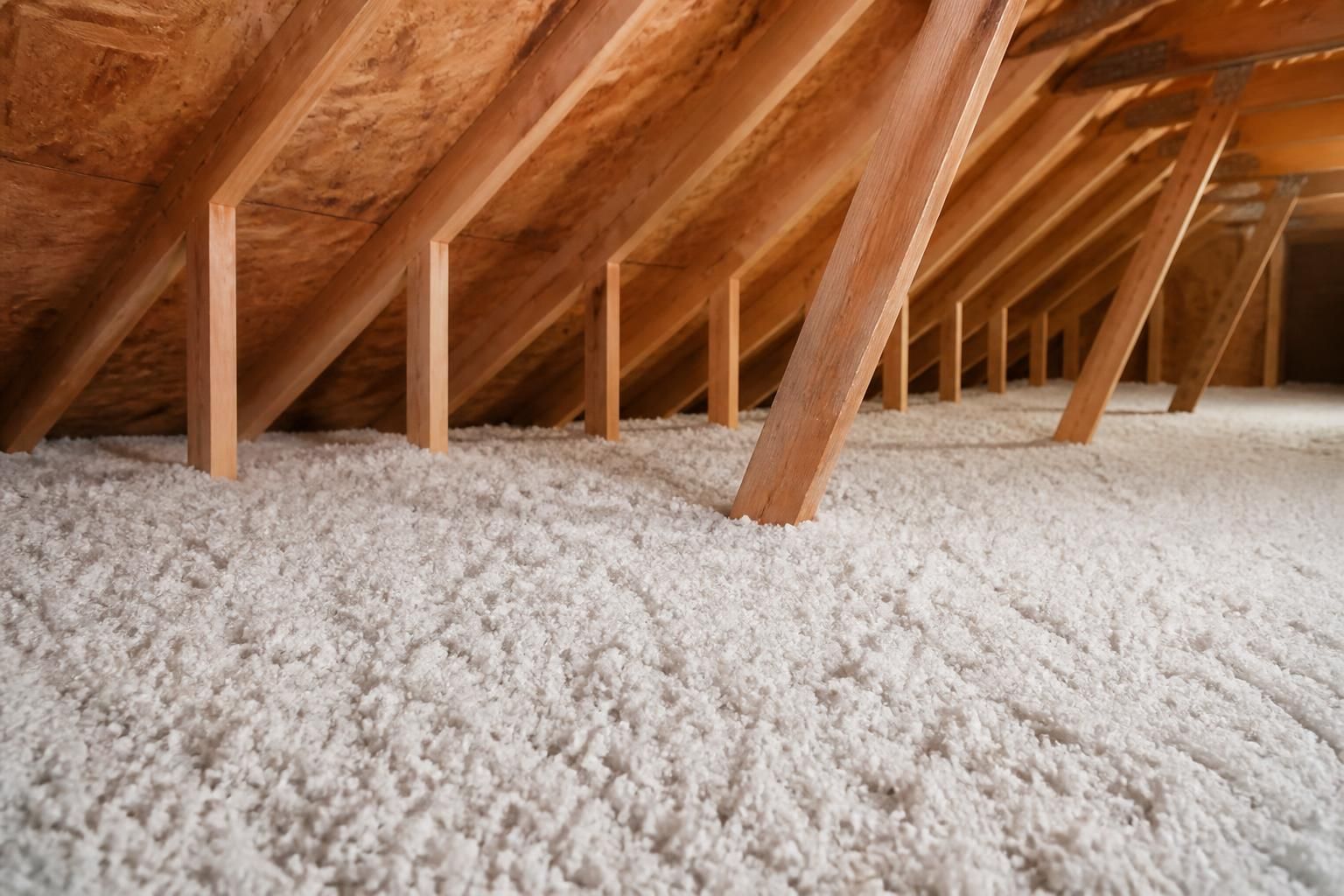
Rooms that never seem to stay warm, higher heating bills, and an attic that feels underperforming are common signs your home may need a better insulation layer. If you notice uneven temperatures, drafts, or thin coverage over joists and corners, blown-in insulation can help restore steady comfort without major disruption.
Edmonton Insulation Company provides blown-in insulation for homes and buildings at 10718 124 St, Edmonton, AB T5M 0H1. We assess the existing insulation, explain the best approach for your space, and install new material where it will make the biggest difference for comfort, energy use, and building performance.
Blown-in insulation is a loose-fill material installed with specialized equipment so it settles into gaps, around framing, and across open attic areas. It is especially useful where batts leave voids or where access is limited. Instead of working around every obstacle by hand, the material is distributed evenly to create a more consistent thermal barrier.
This method is often used for attic insulation, attic top-ups, and areas where existing insulation has thinned over time. It can also be part of larger insulation upgrades for older homes, renovations, and new construction. When installed at the right depth, blown-in insulation helps slow heat movement, reduce drafts, and support a more comfortable indoor environment through Edmonton’s long heating season.
Blown-in insulation works well where coverage matters more than rigid shape. It is commonly used for:
Many insulation problems show up before a homeowner ever looks in the attic. If the upper floors feel cold in winter or stuffy in warmer weather, the attic may be letting too much heat escape or enter. The same is true when some rooms are comfortable and others are not, even when the thermostat is set the same.
Common signs include drafty ceilings, visible settling, chilly upstairs bedrooms, and ice dam concerns related to heat loss through the roof assembly. In some homes, poor attic coverage also contributes to condensation, moisture issues, and mould prevention concerns because warm indoor air is moving where it should not. Blown-in insulation can be part of the solution, especially when paired with air sealing and attic ventilation improvements.
Blown-in insulation is not a single product. The right choice depends on the space, the condition of what is already there, and the performance goal for the project. Edmonton Insulation Company works with materials commonly used for attic insulation and complete upgrades, including cellulose and fiberglass-based options.
Cellulose is often selected for dense coverage and good gap filling. Fiberglass blown-in insulation is also used where a lighter loose-fill approach fits the project. The material choice should always match the structure, access, and target R-value rather than following a one-size-fits-all approach. Our job is to explain the difference clearly so you can make a practical decision.
Cellulose is a loose-fill insulation made to pack well across open attic cavities and uneven surfaces. It is often chosen when a homeowner wants strong coverage around framing, recessed spaces, and irregular areas. Fiberglass loose fill is another option for attic applications and may suit certain retrofits or top-up projects.
Both can improve thermal resistance when installed to the right depth. The key is not just the product, but how evenly it is applied and whether the attic has been prepared first.
Every blown-in insulation project starts with a look at the existing conditions. That includes checking current insulation depth, looking for air leakage points, reviewing access, and confirming whether removal, top-up, or a full upgrade makes the most sense. If the attic needs sealing or ventilation correction first, we address that before adding new material.
From there, the insulation is installed to create even coverage across the target area. This helps avoid thin spots that can leave parts of the home exposed to heat loss. Edmonton Insulation Company keeps the process straightforward and explains what is being done at each stage so there are no surprises.
Blown-in insulation performs better when it is paired with air sealing. If warm indoor air leaks into the attic, it can carry moisture with it and reduce the benefit of the insulation layer. Sealing common bypasses first helps the new insulation do the work it is meant to do.
This is especially important for attic insulation upgrades, insulation removal projects, and homes with recurring comfort complaints. Sealing around penetrations, framing transitions, and access openings can reduce drafts and support better overall building performance. It also helps make R-value improvements more effective because the insulated area is not undermined by air movement.
Air sealing helps reduce heat loss at the source. Without it, homeowners may add insulation and still notice the same comfort problems. When the attic is prepared correctly, blown-in insulation can create a steadier thermal blanket across the space and support better long-term results.
Blown-in insulation is useful across many project types, not just attics. It can support homes, garages, basements, crawl spaces, and some commercial insulation applications where consistent coverage is important. It is also a common choice for renovations and insulation upgrades where the goal is to improve performance without extensive demolition.
For Edmonton homes and buildings, this method is often selected when existing insulation is thin, compressed, or incomplete. It can also help builders and property managers meet project goals for comfort and energy performance while keeping installation efficient.
Edmonton homes need insulation that can handle serious temperature swings and long periods of heating demand. That means the installed depth, coverage, and air sealing strategy all matter. A thin or uneven attic layer may be enough to leave rooms uncomfortable even when the furnace is working hard.
Edmonton Insulation Company helps homeowners and property managers choose a practical path based on the building and the space. Sometimes the answer is a simple attic top-up. Other times it is removal, sealing, and a new blown-in layer. The goal is always the same: improve comfort, reduce wasted heat, and give the building a stronger thermal envelope.
If upper rooms are hard to keep comfortable, the attic looks thin, or the insulation no longer reaches the expected depth, a top-up may be the right move. A quick assessment can confirm whether the existing layer is still doing its job.
Yes, it often can. If the existing insulation is dry, stable, and suitable to keep, a new blown-in layer can be added on top. If the old material is damaged, contaminated, or uneven, removal may be recommended first.
It can help reduce the comfort problems that drafts create, especially when installed after air sealing. The insulation slows heat loss, while sealing helps stop unwanted air movement through gaps and openings.
No. It is commonly used for attics, but it can also be part of garage insulation, basement work, crawl space upgrades, and some commercial insulation projects depending on the build and access.
Coverage depth, even distribution, air sealing, and the condition of the existing structure all matter. A well-installed layer performs better when it is matched to the space and supported by good preparation.
You can expect a clear review of the space, a discussion of the current insulation condition, and a practical recommendation for the next step. Edmonton Insulation Company keeps estimates straightforward so you know what the project involves before work begins.
If you are dealing with cold rooms, attic settling, or comfort problems that keep coming back, blown-in insulation may be the right fix. Edmonton Insulation Company serves Edmonton, AB T5M 0H1 and nearby communities with honest recommendations, quality materials, and careful installation.
Call +16477005472 to request a free insulation assessment and get a clear plan for your home or building. We will review the space, explain your options, and help you choose the right insulation approach for lasting comfort.
Start Here
Tell us about your attic, walls, garage, basement, crawl space, or commercial property. We will help you understand the best insulation approach for comfort, efficiency, moisture control, and long-term performance.